
Every month the payouts tie to the bank, the clearing account goes to zero, and the close moves on. Nobody signs off on the fees, though. They just get accepted as the number that was left over.
For most finance teams, gateway fees sit in a gap between owners. Treasury watches cash, AP never sees an invoice, and revenue accounting books the gross. So a cost line that often runs at 3% or more of card revenue gets less scrutiny than a SaaS subscription.
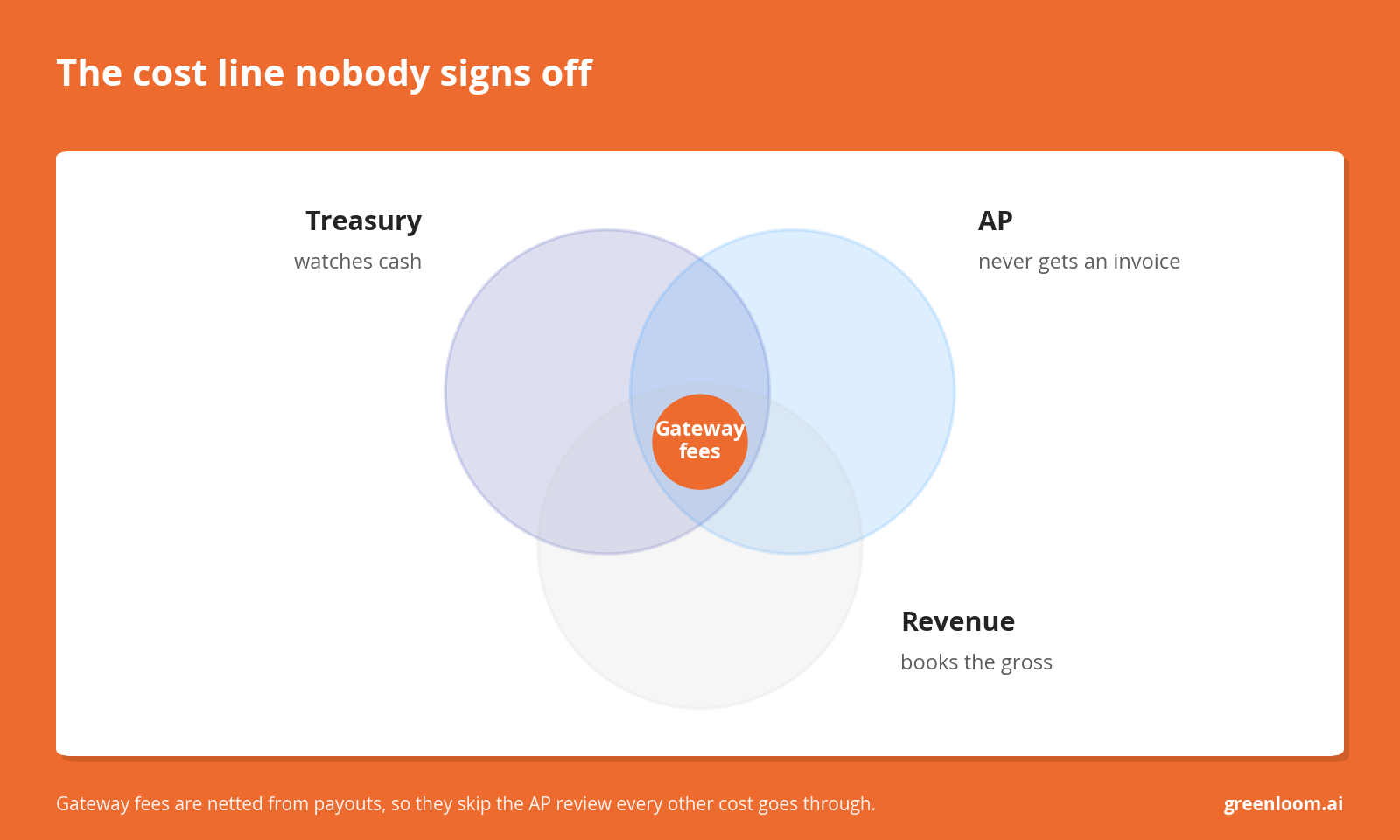
Auditing a settlement file isn't reconciliation. Reconciliation proves the payout arrived. An audit asks whether each deduction was contractually right and commercially smart: the fee rate by card segment, the fees lost on refunds, which disputes you chose to fight, and the tax on fees you could have recovered. That's where the leakage is.
Why is your effective rate higher than your contracted rate?
Because your contracted rate is the price of one clean domestic transaction, and much of your volume isn't that. Cross-border cards, currency conversion, refunds, disputes and tax on fees all sit on top. Your real cost is total deductions divided by gross volume, and it moves with your customer mix, not with your contract.
Take Stripe's standard US pricing, since it's public. The rate is 2.9% plus 30 cents. An international card adds 1.5%, and currency conversion adds another 1%. A $100 sale that looks like it cost $3.20 actually costs $5.70.
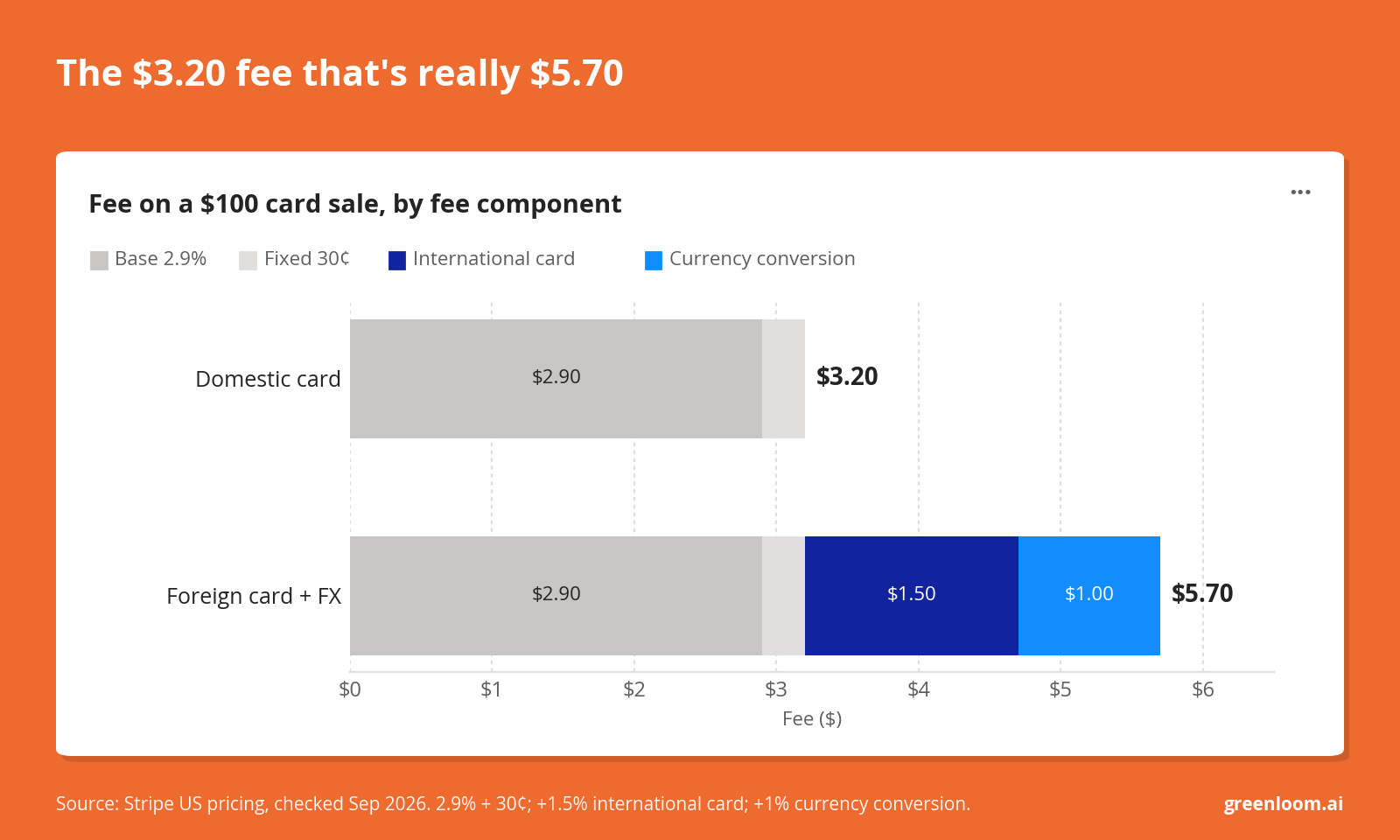
None of this is hidden. It's all on the pricing page. The problem is that nobody models it. If 30% of your volume moves offshore after a new market launch, your gateway cost can jump with no change to the contract, and nobody notices until someone asks why margin slipped.
The first number worth tracking monthly is your effective rate, split by segment: domestic vs cross-border, card vs wallet, and each gateway separately. The blended figure hides the segment that's moving.
How much are refunds really costing you?
More than the refund rate suggests. Most gateways keep their fee when you refund, so every refunded sale is revenue you gave back plus a processing cost you still paid. Refund rate multiplied by effective rate is a real leakage line, and in high-return categories it's large enough to price into margin.
Stripe's refund documentation is plain about it: the fees from the original payment aren't returned. Shopify Payments moved the same way years ago, and its community forum still has merchants discovering it for the first time. On r/stripe, one seller refunded a $1,200 payment they believed was fraud and still lost the fee. Another runs courses and pays it every time a student switches cohorts.
There's one lever most teams don't know about. Stripe's documentation says a refund issued shortly after the charge, usually within about two hours, can go through as a reversal, and Stripe doesn't withhold fees on reversals. For businesses on interchange-plus pricing, reversals also tend to carry lower network costs than refunds.
That has an operational consequence. If your fraud review or order validation runs as a batch the next morning, you're turning cheap reversals into expensive refunds. Authorise-then-capture does the same job for orders that often get cancelled: nothing captured means nothing refunded.
Which chargebacks are worth fighting?
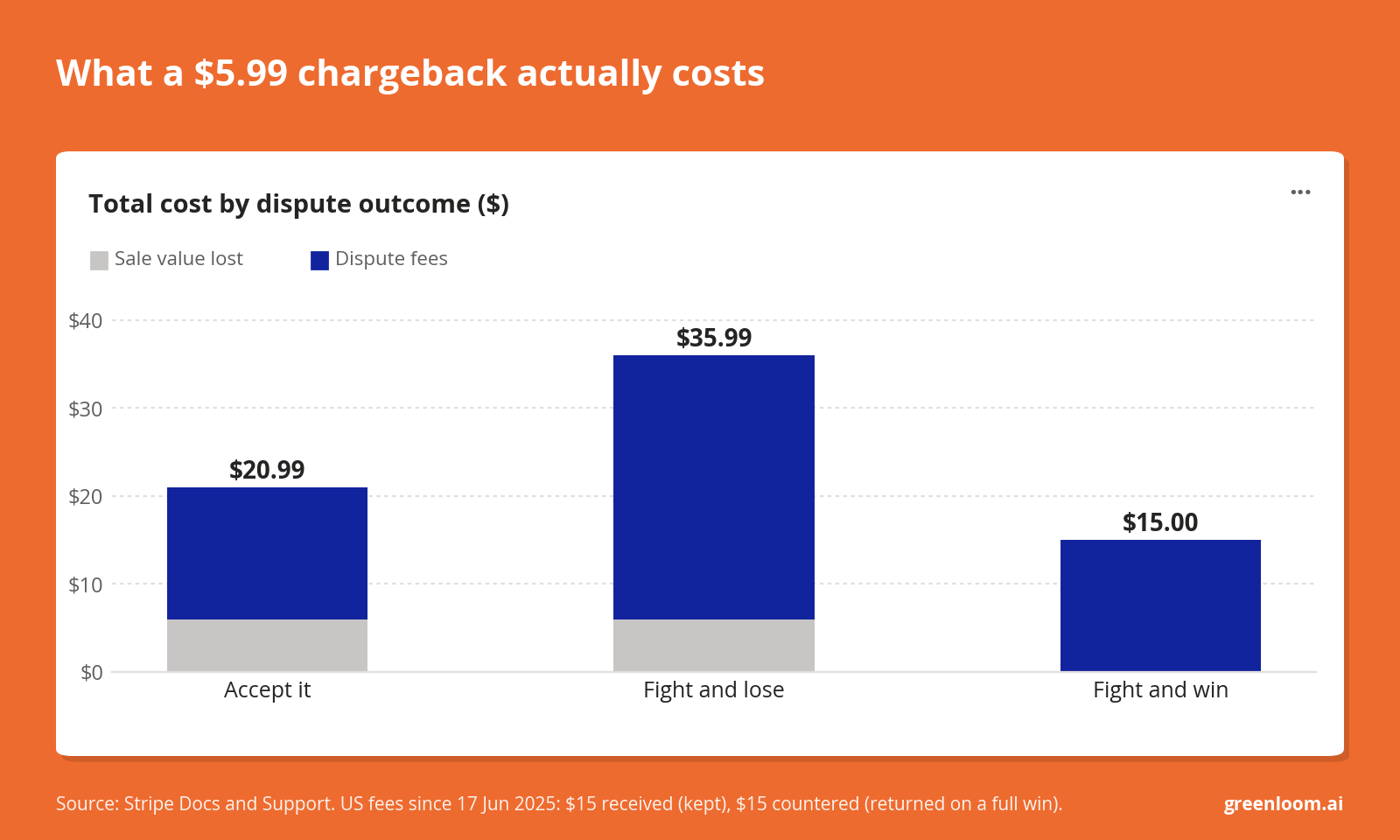
Fewer than most teams fight. A dispute now carries two fees on Stripe: one when it arrives, which you never get back, and one if you contest it, which you get back only on a full win. On low-value charges, fighting can cost more than the sale. That makes dispute response a policy decision, not a reflex.
Since 17 June 2025, Stripe charges a dispute received fee ($15 in the US, non-refundable outside Mexico) and a separate dispute countered fee of the same amount if you respond. Win and the countered fee comes back. Win partially and neither fee comes back.
Most online content still describes the old single fee. On Reddit, the most common complaint is merchants who won and still paid. One user lost about $20 contesting a chargeback on a $5.99 subscription.
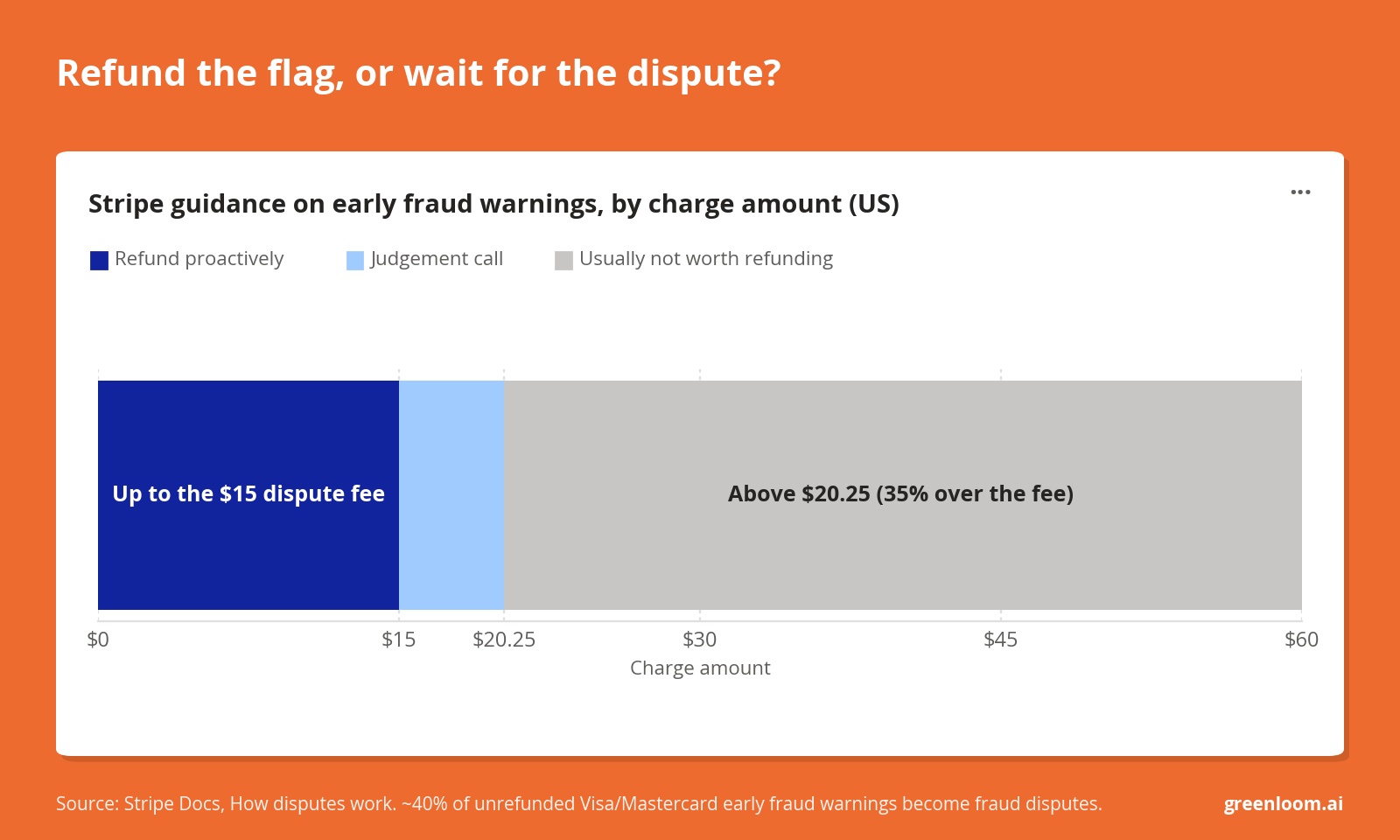
Stripe's own guidance goes further than most finance teams realise. Its analysis says the best point to proactively refund a payment flagged with an early fraud warning is when the charge is roughly equal to or below your dispute fee. It also says refunding flagged charges more than 35% above the dispute fee likely isn't worthwhile. According to Stripe, about 40% of Visa and Mastercard early fraud warnings turn into fraud disputes if you don't refund.
Two more details matter at close. The disputed amount can differ from the original charge, because FX moves between purchase and dispute. Stripe's own example has a €100 sale coming back as a €107.86 chargeback. And the fees for disputes that stay open for 60 to 75 days while the issuer decides land in a different period from the sale.
Is there tax on your gateway fees that you're not recovering?
Often, yes. Several gateways charge VAT or GST on their own fees, and for a registered business that tax is usually recoverable input tax. But recovery needs the gateway's tax invoice, which is usually sitting in a dashboard, not in AP. So the tax gets expensed with the fee and never reaches the return.
Razorpay adds 18% GST on its fee in India, so a 2% fee is really 2.36%.
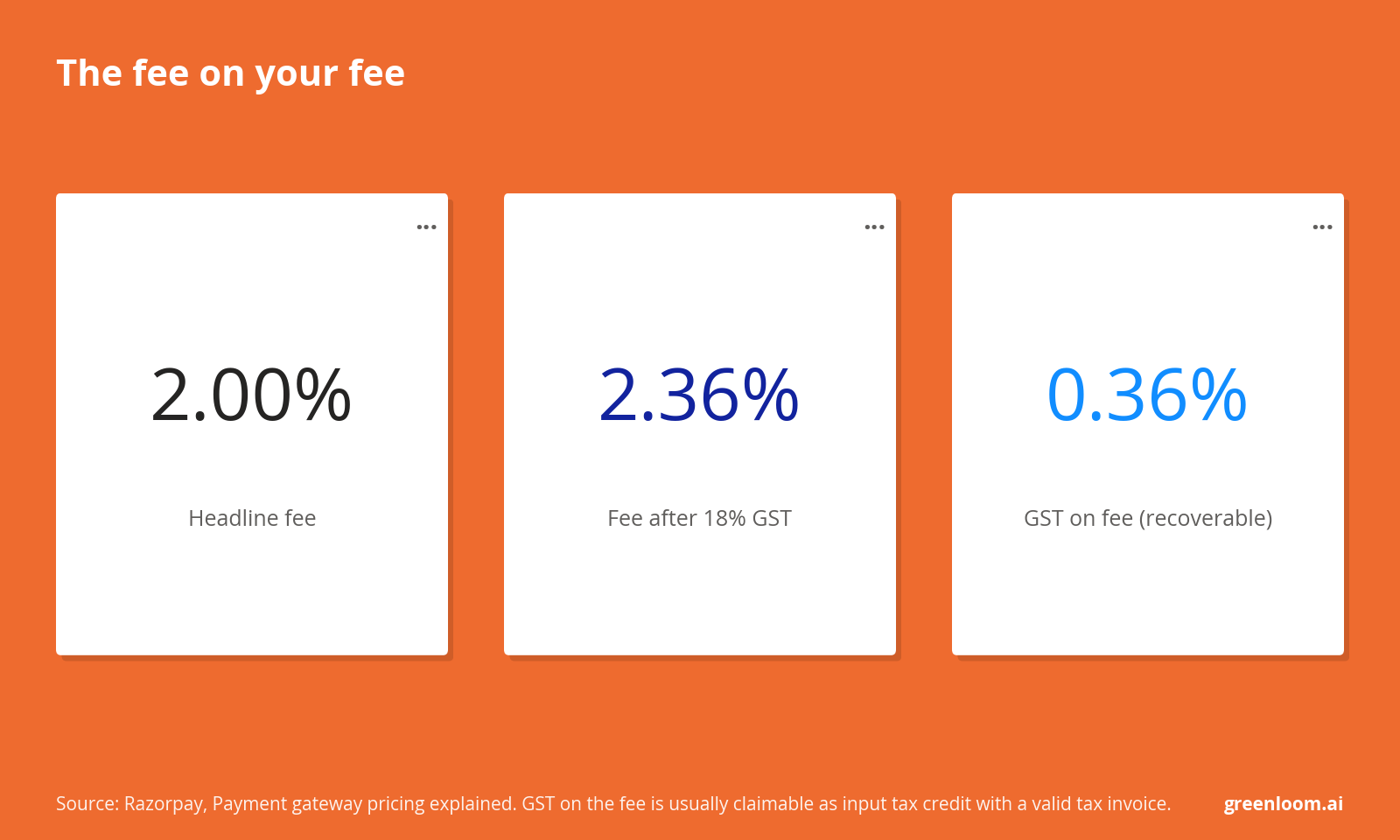
Stripe charges VAT on its fees in a few jurisdictions, including Ireland, the UAE, Norway and Switzerland. It issues tax invoices by the 10th of the following month, and it records the tax as its own line in the balance data [tax_fee].
Because the gateway nets its fee from the payout instead of billing you, the tax never goes through the AP process that would normally catch it. It's small per transaction and consistent every month, which is exactly the kind of line nobody looks at.
Worth checking with whoever files your indirect tax: whether the gateway's fees are being claimed, whether the gateway's tax invoice is being retained, and whether a valid tax registration is on the gateway account. In some jurisdictions, providing it changes whether VAT is charged at all.
What does a proper monthly fee review cover?
Five things: effective rate by segment against the contract, fees lost on refunds and whether any could have been reversals, dispute fees against a written fight policy, tax on fees against invoices claimed, and any rate change since last month. Each has an owner and a number you can trend.
In practice it looks like this:
.png)
1. Rate drift
Recalculate the fee on each transaction from the rate you actually negotiated, not the list price. Negotiated rates drift when a gateway reprices, or when volume shifts you out of a pricing tier.
2. Refund leakage
Total the fees paid on refunded sales. Check how many refunds happened inside the reversal window, and how many could have.
3. Dispute economics
Total received and countered fees, win rate, and net recovered value. Set a floor below which you don't contest.
4. Tax recovery
Match tax on fees to invoices and to what was actually claimed.
5. Held funds
Reserve and rolling holds are working capital. Track release dates the same way you would a receivable.
None of this is hard. It's just granular. One gateway on a few hundred transactions is an afternoon. Three gateways, a marketplace and two currencies is a file nobody opens, so the review quietly stops and totals get trusted instead.
How does Greenloom handle a settlement file?
Greenloom's Reconciliation agent reads each gateway's settlement file and matches every line to the order behind it. It tests each fee against the rate you agreed and holds anything that breaks it, with the reason attached. Nothing posts to your ERP until someone on your team approves it, and every decision is logged.
The flow is simple. You connect the bank statement and the gateway files. The agent works through them line by line, ties each payment to its order, and checks the fee against your contracted rate for that card type.
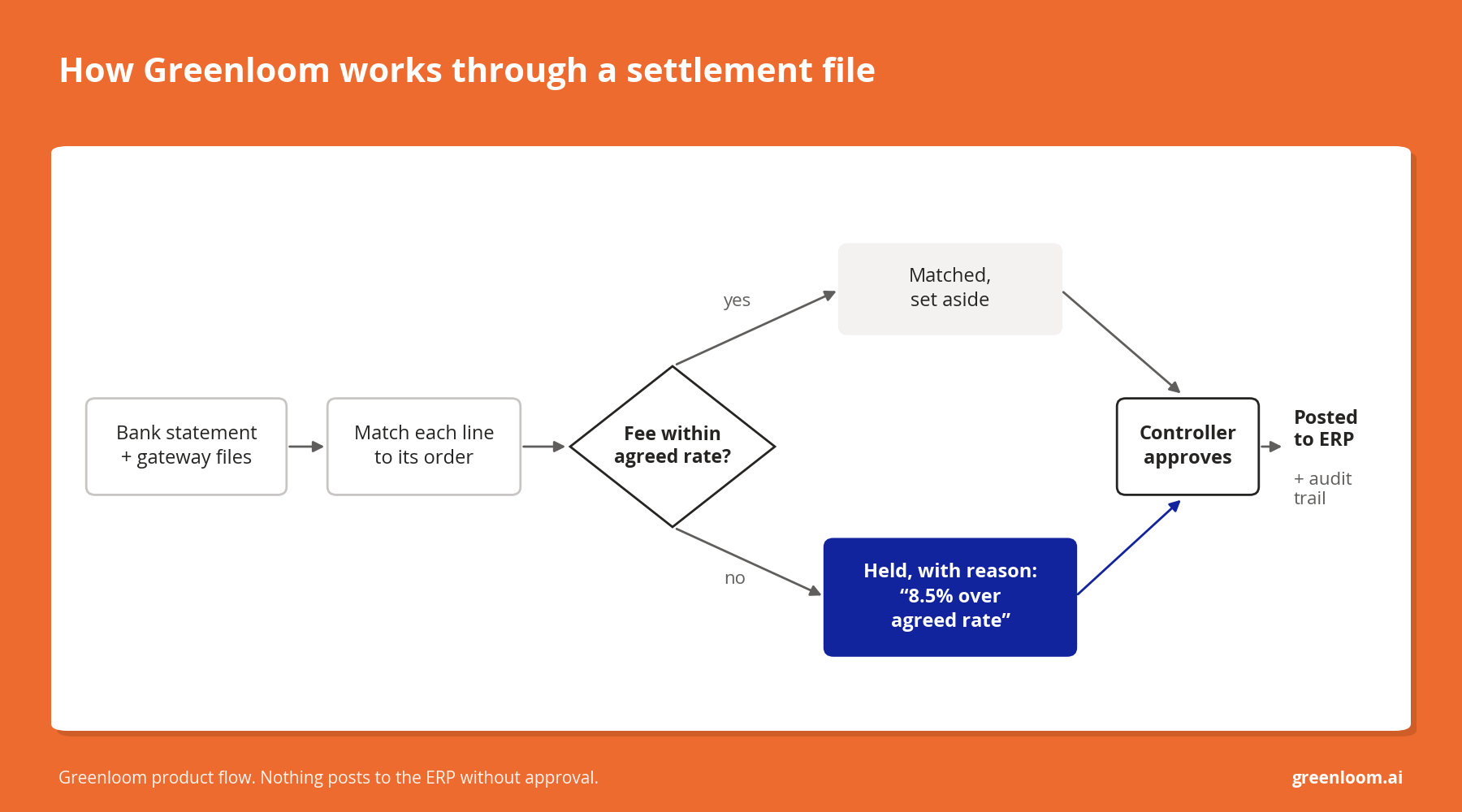
Lines that fit are marked as matched and set aside. Lines that don't are held with a plain reason, for example “held: 8.5% over agreed rate,” or a refund with no matching order, or a fee that doesn't fit any rate on file. Those land in a short queue for your team.
Your controller reviews the exceptions, not the file. They approve, reject or query each one, and only then does anything post. At month end there's a trail of what matched, what waited and why, which is what an auditor will want to see anyway.
The fee review stops depending on someone finding a free afternoon, and it runs on every payout instead of a sample.
See what your last settlement file actually took. [Join the beta list.]
Frequently asked questions
How do I know if my payment gateway is overcharging me?
Calculate your effective rate by segment, meaning total deductions over gross volume, split by domestic, cross-border and gateway. Compare each to your contract. A gap usually traces to card mix, refund fees, dispute fees or rate drift after repricing, rather than an outright billing error.
Does Stripe return its fee on refunds?
No. Stripe keeps the original processing fee on refunds. A refund issued soon after the charge, usually within about two hours, can process as a reversal instead. Stripe says it doesn't withhold fees on reversals.
Are Stripe dispute fees refunded if we win?
Only the countered fee, and only on a full win. Since June 2025 Stripe charges a received fee, which is non-refundable outside Mexico, and a separate countered fee if you respond. On a partial win, neither fee is returned.
Can we recover VAT or GST charged on gateway fees?
Usually, if you're registered and hold the gateway's tax invoice. Razorpay charges 18% GST on its fees in India. Stripe charges VAT on its fees in some countries, including Ireland and the UAE, and issues monthly tax invoices. Confirm the treatment with your indirect tax team.
Is interchange-plus pricing cheaper than blended pricing?
It depends on your card mix. Interchange-plus passes through the real network cost for each transaction plus a margin, so it's more transparent and usually cheaper for domestic debit-heavy volume. Blended pricing is simpler but hides which segments are expensive. Either way, you can only compare the two using your own transaction data.
How often should gateway fees be reviewed?
Tie every payout when it lands. Review fees monthly at segment level, and do a full rate check whenever the gateway announces a pricing change or your volume mix shifts.
Updated
-11.Why%20Odoo's%20Standard%20Bank%20Matching%20Fails%20on%20Saudi%20mada%20Settlements%20(And%20How%20to%20Fix%20It))

Comments
Join the conversation and share your thoughts with the community.
Community
Be the first to share your perspective.